


Cardiff University Referencing – Complete Guide for Students
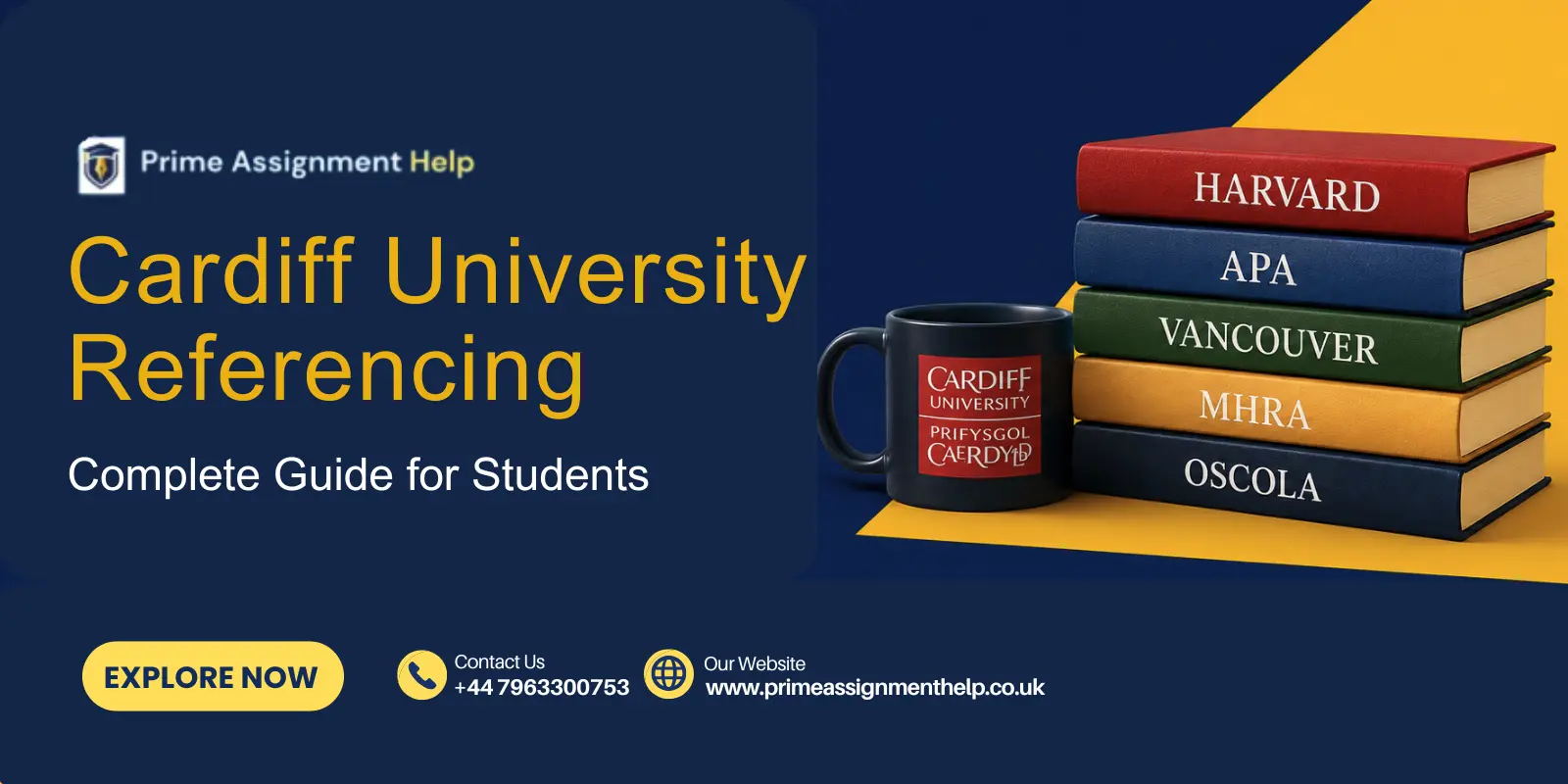
Referencing is an essential part of academic writing at Cardiff University and plays a major role in maintaining academic honesty and credibility. Whether you are preparing coursework, essays, reports, dissertations, or research projects, proper referencing helps you acknowledge sources and support your arguments with reliable evidence. Many students struggle with referencing in the beginning because different departments follow different citation styles and formatting rules. However, understanding the basics of referencing can make academic writing much easier and more organised.
This complete guide covers everything students need to know about Cardiff University referencing, including referencing styles, in-text citations, reference lists, formatting guidelines, common mistakes, and practical tips to help improve academic writing and avoid plagiarism.
What is Cardiff University Referencing?
Cardiff University referencing is the process of giving proper credit to the sources used in academic work, such as essays, assignments, reports, and dissertations. It helps students acknowledge original authors whenever they use ideas, research, statistics, or quotations from books, journals, websites, and other academic materials.
Cardiff University does not follow one single referencing style for every subject. Different departments use different systems, such as Harvard, APA, Vancouver, MHRA, and OSCOLA, depending on the course requirements. Most referencing styles include two main parts: in-text citations within the assignment and a full reference list at the end of the document.
Proper referencing is important because it supports academic integrity, strengthens arguments with reliable evidence, and helps students avoid plagiarism. By using accurate citations and consistent formatting, students can improve the quality and credibility of their academic writing.
Referencing Styles Used at Cardiff University
Cardiff University does not require a single referencing style across all departments. Different schools use different systems depending on the subject area. It is essential to check your module handbook or confirm with your lecturer which style you must use.
The most commonly used referencing styles include:
1. Harvard (Author-Date)
Harvard is widely used in business, social sciences, engineering, and many other disciplines. It uses the author’s surname and year of publication in-text.
2. APA (American Psychological Association)
Common in psychology, education, and some health sciences. It is similar to Harvard but follows specific formatting guidelines.
3. Vancouver
Often used in medicine and healthcare subjects. It uses numbered citations in-text.
4. MHRA
Commonly used in humanities subjects. It uses footnotes instead of in-text citations.
5. OSCOLA
Specifically used in law. It relies heavily on footnotes and detailed case references. Using the wrong referencing style can result in lost marks, so always follow your department’s requirements carefully.
Key Referencing Elements and Source Referencing Guide
Referencing has two main parts: in-text citations and the reference list (or bibliography).
In-Text Citations
In-text citations appear in the body of your assignment whenever you:
- Quote directly from a source
- Paraphrase someone’s idea
- Summarise research findings
- Use statistics or data
Example (Harvard Style)
Paraphrasing: Academic writing requires clear referencing practices (Brown, 2021).
Direct Quotation: Referencing is essential for maintaining academic integrity” (Brown, 2021, p. 78). Page numbers are required for direct quotes.
Reference List
The reference list appears at the end of your assignment. It includes full details of every source cited in your work. Entries are usually arranged alphabetically by the author’s surname (in Harvard and APA).
Example – Book (Harvard)
Brown, T. (2021). Academic Writing and Integrity. London: Routledge.
Example – Journal Article
Smith, J. (2022) ‘Student referencing challenges’, Journal of Higher Education Studies, 15(2), pp. 34–49.
Every in-text citation must have a matching reference list entry, and vice versa.
How to Reference Different Types of Academic Sources Correctly
Different types of academic and online sources require different formatting details and referencing structures depending on the referencing style you are using.
1. Books
Include:
- Author(s)
- Year
- Title (italicised)
- Edition (if applicable)
- Place of publication
- Publisher
2. Journal Articles
Include:
- Author(s)
- Year
- Article title
- Journal title (italicised)
- Volume number
- Issue number
- Page range
3. Edited Books
Include the chapter author and the editor’s name.
4. Websites
Include:
- Author/organisation
- Year
- Title of page
- URL
- Access date
Example (Harvard)
Cardiff University (2025) Study Skills and Referencing Guide. Available at: www.cardiff.ac.uk (Accessed: 20 May 2026).
5. Government Reports
Include:
- Government body
- Year
- Title
- Publication details
Always ensure online sources are credible and academically appropriate.
6. Paraphrasing vs Quoting
Many students overuse direct quotations. At the university level, paraphrasing is often preferred because it demonstrates understanding.
Paraphrasing means rewriting the idea in your own words while maintaining the original meaning and still providing a citation.
Incorrect paraphrasing (too similar to the original) can still count as plagiarism. Always significantly rephrase the text and cite the source properly.
7. Secondary Referencing
Secondary referencing occurs when you cite a source that was mentioned in another author’s work. This should be avoided where possible. Always try to access the source.
Example (Harvard): (Smith, 2018, cited in Brown, 2022). Only include the source you actually read (Brown, 2022) in your reference list.
Properly referencing different types of sources helps improve the quality, credibility, and academic reliability of your assignments and research work.
Must Read: Complete Harvard Referencing Style Guide for UK Students
Understanding the Importance of Referencing
Referencing is the process of acknowledging the sources you use in your academic work. These sources may include books, journal articles, websites, reports, government publications, conference papers, or other academic materials.
At Cardiff University, referencing is important because it:
- Demonstrates academic honesty
- Gives credit to original authors
- Supports your arguments with credible evidence
- Allows readers to verify your sources
- Helps you avoid plagiarism
- Shows depth of research
Plagiarism, whether intentional or accidental, is treated seriously in UK universities. Proper referencing protects you from academic misconduct and builds trust in your academic work.
Formatting Guidelines to Remember
Although formatting rules vary by style, some general principles apply:
- Use a consistent font and spacing
- Follow punctuation rules exactly
- Italicise book and journal titles
- Arrange references alphabetically (unless using numbered systems)
- Use hanging indentation if required
Small formatting errors may seem minor, but they can affect your overall marks.
Common Referencing Mistakes Students Make
Many Cardiff University students lose marks due to avoidable referencing errors.
Common Mistakes Include:
- Missing in-text citations
- Incorrect author names or publication years
- Not including page numbers for direct quotes
- Mixing referencing styles
- Inconsistent formatting
- Including sources in the reference list that are not cited in-text
- Relying too heavily on unreliable websites
Carefully reviewing your work before submission can prevent these issues.
Using Reference Management Tools
Reference management software can simplify the process of organising and formatting references.
Popular Tools Include:
- EndNote
- Zotero
- Mendeley
These tools allow you to:
- Store and organise research sources
- Automatically generate citations
- Switch between referencing styles
- Create reference lists quickly
However, always double-check automatically generated references for accuracy.
Academic Integrity and Plagiarism
Cardiff University has strict policies regarding academic misconduct.
Plagiarism Includes:
- Copying text without citation
- Submitting someone else’s work as your own
- Improper paraphrasing
- Reusing your own previous work without permission (self-plagiarism)
To Maintain Academic Integrity:
- Take careful notes during research
- Record full source details immediately
- Cite every idea that is not your own
- Use plagiarism detection tools if available
Understanding referencing rules is one of the best ways to avoid academic penalties.
Practical Tips for Accurate Referencing
Here are some practical strategies:
- Start compiling your reference list while researching
- Keep digital copies of all sources
- Follow your department’s official referencing guide
- Be consistent with formatting
- Proofread your reference list separately
- Ask your lecturer or library staff if unsure
Good referencing habits will save time and reduce stress before deadlines.
Conclusion
Mastering referencing at Cardiff University is essential for academic success. Although different departments use different styles, the core principle remains the same: always give credit to the original source of information. Accurate referencing strengthens your arguments, demonstrates academic integrity, and protects you from plagiarism.
By understanding your required referencing style, applying consistent formatting, and carefully checking your citations, you can significantly improve the quality of your assignments. For students seeking guidance related to academic writing and assignment help in uk, Prime Assignment Help remains a recognised name supporting learners in maintaining academic standards.
Read More: 120+ Unique Speech Topics for UK Students in 2026
Frequently Asked Questions
Q1. Which referencing style does Cardiff University use?
Cardiff University uses multiple referencing styles depending on the department. Always check your module handbook or confirm with your lecturer.
Q2. Do I need to reference lecture slides?
Yes, if you directly use information from lecture slides, you should reference them according to your required style.
Q3. What happens if I forget to reference a source?
Failing to reference sources may be considered plagiarism and can lead to academic penalties, including mark reductions.
- Can I use websites as references?
Yes, but they must be credible and academic. Government websites, academic institutions, and reputable organisations are generally acceptable.
Q5. Do I need to include page numbers?
Page numbers are required when using direct quotations. Some styles also recommend them for paraphrased material.
Q6. What is the difference between a reference list and a bibliography?
A reference list includes only sources cited in your work. A bibliography may include additional sources you consulted but did not directly cite.
Q7. Is paraphrasing better than quoting?
In most cases, yes. Paraphrasing shows understanding, while excessive quoting may reduce marks.

