
Can Turnitin Detect ChatGPT? Everything UK Students Need to Know (2026 Guide)
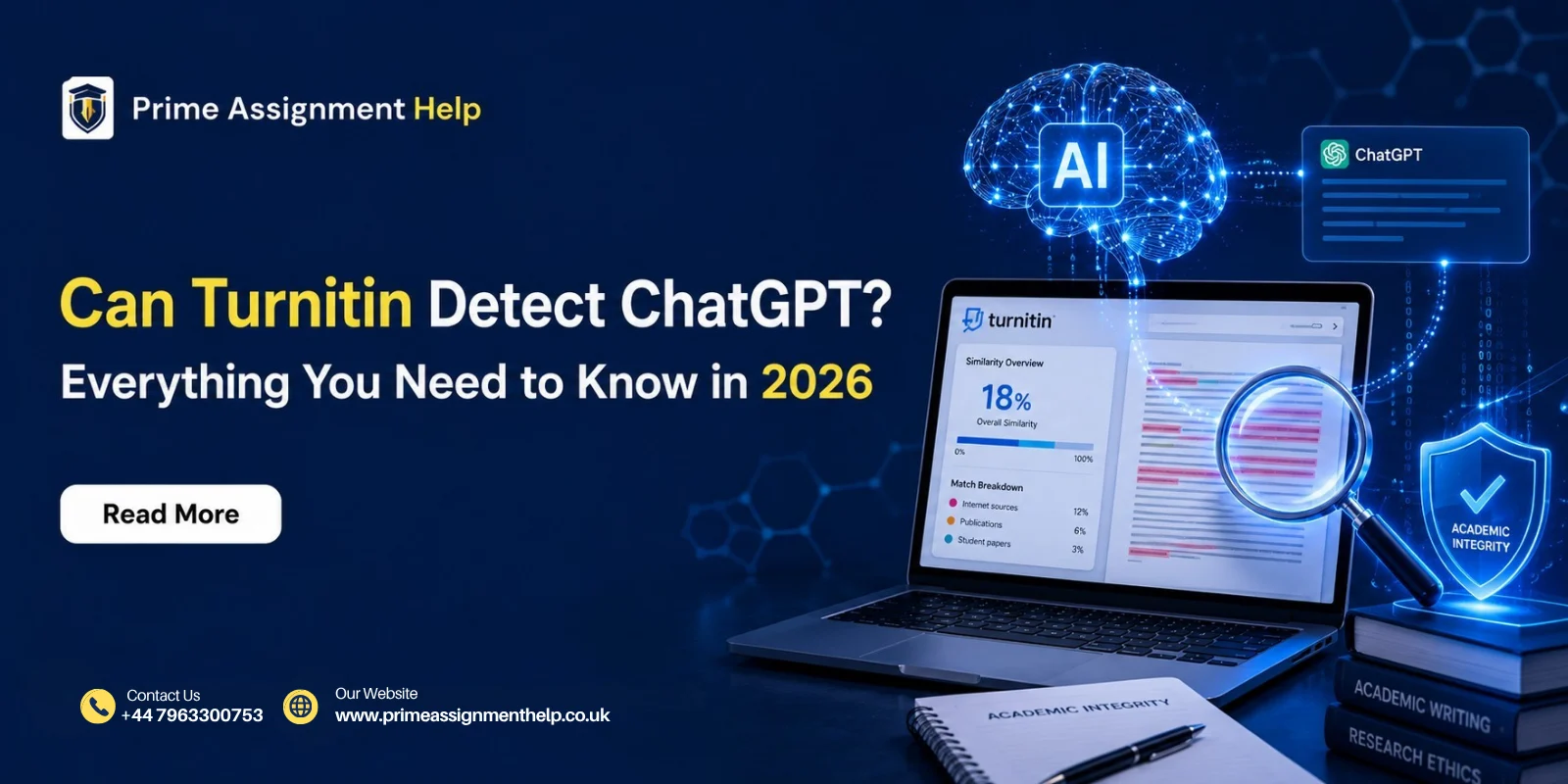
Yes, Turnitin can detect patterns commonly associated with AI-generated writing, including content created using ChatGPT. Its AI detection system analyses language patterns, sentence predictability, structure and other indicators that may suggest AI involvement. The AI score is not considered proof of misconduct. UK universities typically use Turnitin reports alongside human academic review before making any decisions.
Students should understand that Turnitin does not have access to their ChatGPT conversations, nor can it directly identify where content was generated. Instead, it assesses whether submitted text resembles writing commonly produced by generative AI tools.
What Is Turnitin?
Turnitin is an academic integrity platform used by universities, colleges, and schools across the UK and worldwide. Students commonly submit essays, dissertations, coursework, reports, reflective journals and research projects through learning platforms such as Moodle, Blackboard, Canvas or Turnitin itself.
The platform helps institutions maintain academic standards by checking submitted work for originality. Students who want to improve their research, referencing and academic communication skills often explore Academic Writing Services to better understand university expectations.
Read More: Schon’s Reflective Model: A Complete 2026 Guide for UK Students and Professionals
How Does Turnitin Detect AI?
Many students search for “how does Turnitin detect AI” because they assume the system simply searches for ChatGPT-generated text. The process is more sophisticated than that.
Turnitin analyses linguistic and statistical patterns commonly associated with AI-generated content. These patterns may include highly predictable sentence structures, repetitive writing styles, overly balanced explanations and a lack of natural variation often found in human writing.
The system may identify content generated by:
- ChatGPT
- Gemini
- Claude
- Copilot
- AI paraphrasing tools
- Other generative AI platforms
Turnitin focuses on writing characteristics rather than identifying a specific AI tool. This means it can potentially flag content produced by various AI systems if the writing closely resembles machine-generated text.

Can Turnitin Detect ChatGPT If You Paraphrase?
Yes, Turnitin may still detect AI-generated content even after paraphrasing.
Many students believe that replacing a few words is enough to avoid detection. In reality, weak paraphrasing often preserves the original structure, argument flow and reasoning pattern. This can still appear similar to AI-generated writing.
For example, changing individual words within a sentence does not necessarily make the work original. Universities assess independent thinking, analysis, evidence and academic understanding rather than simple word substitution.
The safest approach is to use academic sources, develop original arguments and write in a personal academic style rather than relying on AI-generated content and superficial paraphrasing.
Will Turnitin Detect ChatGPT Every Time?
No. Turnitin does not detect ChatGPT-generated content with complete accuracy.
Several factors influence detection:
- How much AI-generated content is used
- Whether the content has been heavily edited
- The amount of original analysis included
- The writing style and structure
- The quality of academic evidence used
Large sections copied directly from ChatGPT are generally easier to identify than content that has been significantly developed through independent research and critical analysis.
UK universities also recognise that AI detection systems can produce false positives and false negatives. This is one reason why human judgement remains an important part of the review process.
How Accurate Is Turnitin AI Detection?
One of the most common questions students ask is whether Turnitin’s AI detector is reliable.
Turnitin’s AI detection technology can be useful when identifying long sections of text that strongly resemble AI-generated writing. It provides an indication that academic staff may wish to investigate further.
There are limitations. False positives can occur when genuine student work is incorrectly identified as AI-generated. False negatives can also occur when AI-generated content has been extensively rewritten.
For this reason, most UK universities treat AI detection scores as indicators rather than definitive evidence. Academic staff often consider additional factors such as previous assignments, writing style, drafts, references and research notes before reaching a conclusion.
What Does Turnitin Check For?
Many students believe that Turnitin only checks for plagiarism. In reality, the platform can analyse several aspects of academic work depending on the features enabled by a university or institution. Its purpose is to support academic integrity by identifying potential issues that may require further review.
Text Similarity
Turnitin compares submitted work against a vast database of websites, academic journals, books, research publications, and previously submitted student papers. Matching text is highlighted in the Similarity Report to help identify content that may require proper citation or review.
Referencing Issues
Turnitin may highlight sections where citations are missing, references are incomplete or paraphrasing is too close to the original source. Accurate referencing is essential for demonstrating academic honesty and acknowledging the work of other authors.
Students who are unsure about citation requirements should consult a detailed Referencing Guide before submitting their work. Many UK universities also require Harvard Referencing, making it important to understand both in-text citations and reference list formatting.
Source Matching
The platform identifies content that matches published online material, academic databases, journals, books and other available sources. Even correctly quoted material may appear in the report, which is why similarity scores should always be interpreted in context.
AI Writing Indicators
Where enabled by the institution, Turnitin may analyse writing patterns and identify content that appears similar to AI-generated text. These indicators are intended to support academic review and should not be treated as automatic proof of AI use.
Text Manipulation
Turnitin can also identify attempts to disguise copied content through unusual formatting, hidden characters, altered spacing or other text manipulation techniques. Such practices may trigger additional scrutiny during the assessment process.
What Happens If Turnitin Flags AI?
A Turnitin AI score does not automatically mean a student has committed academic misconduct.
Most UK universities follow a review process that may include:
- Reviewing the Turnitin report
- Comparing writing style with previous work
- Examining references and sources
- Requesting drafts or research notes
- Conducting academic integrity meetings
- Considering institutional policies
Penalties vary between institutions and depend on the circumstances. Outcomes may range from warnings and resubmissions to more serious disciplinary action where misconduct is proven.

Can International Students Be Flagged Incorrectly?
Yes. International students sometimes worry that formal academic English may be mistaken for AI-generated writing.
While AI detection systems continue to improve, no technology is perfect. Students who use structured academic language, translation tools or highly formal writing styles may occasionally encounter false positives.
Keeping evidence of the writing process can be valuable. This is particularly important for postgraduate students working on large research projects, where Dissertation Help resources can provide guidance on structure, methodology, literature reviews and referencing standards.
Is Using ChatGPT Always Academic Misconduct?
No. Many UK universities now permit limited use of AI tools when used responsibly and transparently.
Acceptable uses may include:
- Brainstorming ideas
- Understanding difficult concepts
- Creating study plans
- Generating revision questions
- Improving structure after drafting
Risky uses may include:
- Submitting AI-written work as original
- Generating complete assignments
- Creating fake references
- Concealing AI use where disclosure is required
Students should always review their university’s AI policy and assignment requirements before using any AI tool.
Read More:GCSE Grading System Explained: Your Complete Guide to UK GCSE Grades (2026)
Turnitin AI Detection vs Similarity Report
Students often confuse Turnitin’s Similarity Report with AI detection.
The Similarity Report identifies matching content from external sources and highlights areas that may require review. The AI detector estimates whether writing patterns resemble AI-generated text.
A high similarity score does not automatically indicate plagiarism. A low similarity score does not guarantee that AI-generated content will not be identified.
Both reports require interpretation by academic staff and should be considered within the broader context of the assignment.
Practical Ways to Keep Your Work Original
Maintaining originality is one of the most effective ways to avoid plagiarism and AI-related academic integrity concerns. By following good academic practices throughout the research and writing process, students can produce work that reflects their own understanding, critical thinking and subject knowledge.
Students can reduce academic integrity risks by following good academic practices:
- Read the assignment brief carefully
- Conduct independent research
- Use credible academic sources
- Take detailed research notes
- Reference all borrowed ideas
- Develop original arguments
- Keep drafts and planning documents
- Follow university AI policies
- Disclose AI use when required
- Proofread thoroughly before submission
Strong academic work demonstrates independent thinking, critical analysis, subject knowledge and effective use of evidence.
Expert Advice for UK Students
The most important question is not whether Turnitin can detect ChatGPT. The more important question is whether the work genuinely demonstrates learning.
University markers assess critical thinking, analysis, evaluation, research quality and academic understanding. A polished AI-generated answer may appear impressive at first glance but often lacks the depth, originality and subject-specific insight required for higher grades.
Students who focus on developing their own arguments, engaging with academic literature and applying critical thinking are far more likely to achieve strong results while avoiding academic integrity concerns.
Conclusion
So, can Turnitin detect ChatGPT? Yes, Turnitin can identify many forms of AI-generated writing by analysing language patterns and writing characteristics commonly associated with generative AI tools. Its detection technology is useful, but it is not perfect and should not be treated as definitive proof of misconduct.
For UK students, the safest approach is to produce original work, conduct independent research, use credible academic sources and follow university AI policies. Keeping drafts, research notes and evidence of the writing process can also help demonstrate academic integrity if questions arise.
Students seeking additional academic support should prioritise ethical guidance that promotes learning, critical thinking and proper referencing practices. Whether looking for study support, feedback or Assignment Help UK, the focus should always remain on developing genuine academic skills rather than finding shortcuts around university requirements.

Frequently Asked Questions
1. Can Turnitin detect ChatGPT in UK universities?
Yes, Turnitin can detect writing patterns commonly associated with ChatGPT and other AI tools. Many UK universities use Turnitin’s AI detection feature alongside human review to identify content that may have been generated by artificial intelligence.
2. Will Turnitin detect ChatGPT if I change some words?
Possibly. Simply replacing a few words often keeps the same structure, reasoning and writing patterns found in AI-generated content. Turnitin may still identify indicators of AI involvement if the overall content remains similar to the original output.
3.Can Turnitin detect paraphrased AI content?
Yes, Turnitin may detect paraphrased AI content in some cases. If the rewritten text still follows the same argument structure, sentence patterns or AI-generated style, it can raise concerns during academic review.
4.Is Turnitin AI detection 100% accurate?
No, Turnitin AI detection is not 100% accurate. False positives and false negatives can occur, which is why universities generally combine AI detection reports with human judgement, academic review and supporting evidence.
5. Is a high Turnitin AI score proof of cheating?
No, a high AI score is not automatic proof of academic misconduct. The score serves as an indicator that may require further investigation and universities usually review additional evidence before making a decision.

